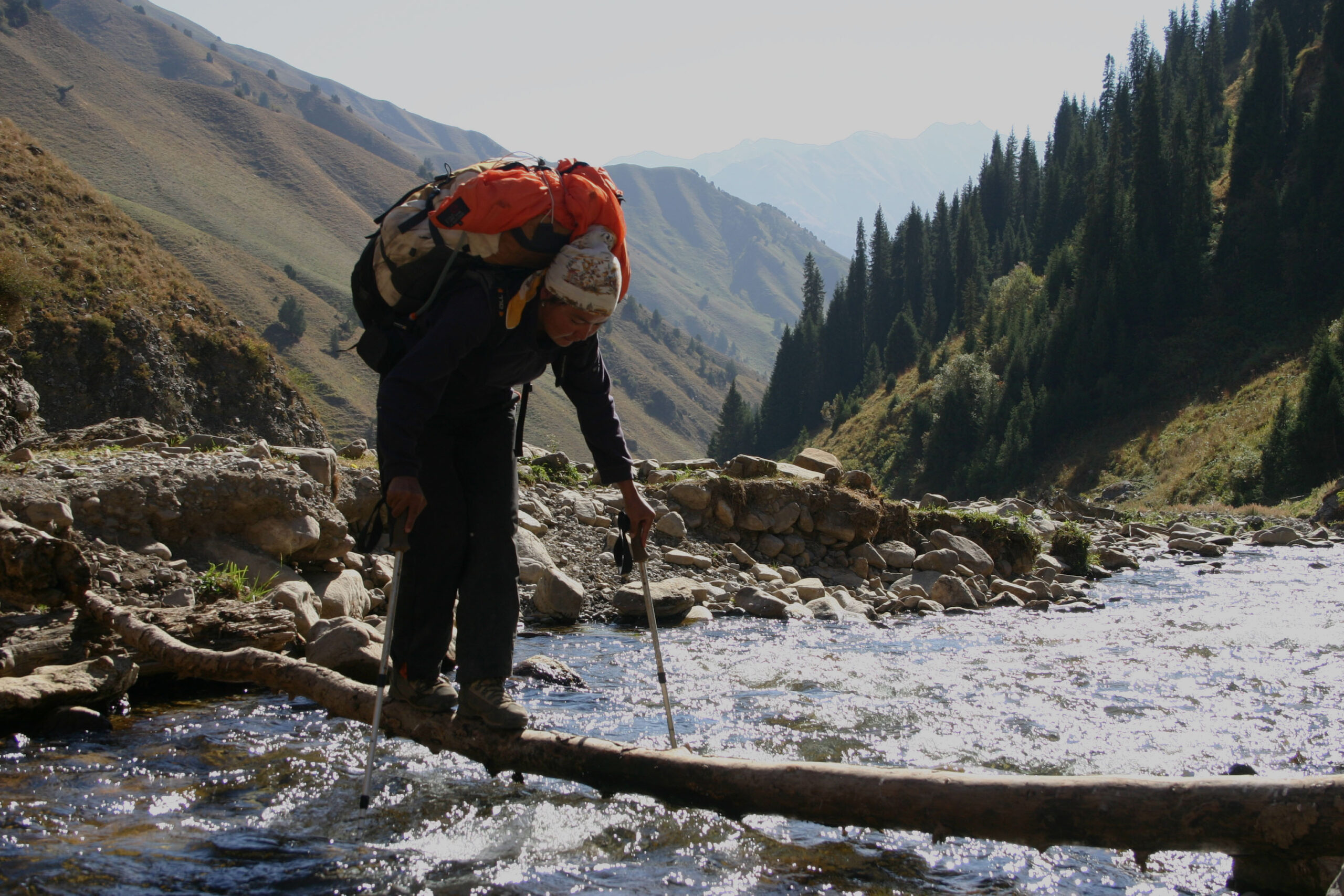
The Kyrgyz people are a mix of the clans who migrated from the banks of the Siberian Yenisei River, with Mongols and smaller tribes whom they absorbed over the centuries. The Kyrgyz people are real nomadic people with a strong nomadic tradition and prefer to live in the mountains, in contrary to the Kazakh people, they prefer to live in the steppes (also in a yurt). For centuries the nomadic people lived in portable dwellings, yurts. The yurts are very suitable for transportation and it is not difficult to assemble them. They are also good for living because they are warm in the cold weather and cool in the summer. The Kyrgyz put felt rugs (“koshma”) on the ground of yurts and decorate walls with felt shyrdaks (carpets). The rich people make their yurts beautiful with brightly colored shyrdaks and use richly embroidered woven strips. The left hand side of the yurt is for men and contains horse or hunting gear, and the right hand side with the stove and cooking utensils is for women and the most honoured place in the yurt is opposite of the entrance, ‘for the guests’. Traditional clothing of Kyrgyz men consists of a padded or sheepskin coat, boots, and a white felt hat with black or red flaps (“kolpak”). Married women also put on often a white turban made of a long scarf. Marriage for the Kyrgyz people was always very important. Earlier and also very often now in the villages an arrangement is usually made between parents. Poor men had to wait for years to save enough before being able to marry. The young woman’s dowry to her new family included the yurta, household equipment, etc. All of it could then have her children (polygamy was common). A woman could divorce her husband and, if he died, she had the right to remain single. When her husband was not at home and after his death, she was the chief at home.